
Historic Timeline
Founding and Heyday (1925-1950s)
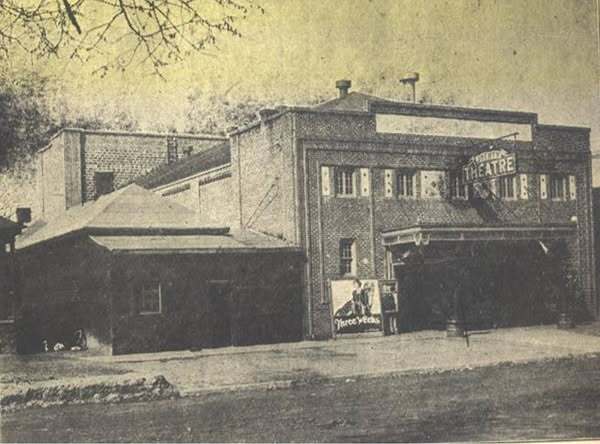
Opened in 1925 by the Martin Theatre company, the Liberty Theatre was the only theater in Columbus, Georgia, to provide non-segregated events during the Jim Crow era, and came to play a crucial role in the development of Black cultural life in the city as a result. Under the direction of local Martin Theatre owner Roy Martin, the Liberty was built in the predominately black East Commons district, an area whose development can be traced back to the end of the Civil War, when it saw the mass settlement of freed African Americans. By the 1920s, the district’s population grew the area from a network of shanty houses into a vibrant residential area, despite lack of support and racial harassment from the city government. Martin seemingly saw lucrative opportunities in this burgeoning community, which had few proper social gathering places outside of the church, possibly leading to his decision to build a theatre in the district. His vision paid off, and the Liberty quickly cemented itself as a staple of daily life for the city’s Black population for several decades to follow.
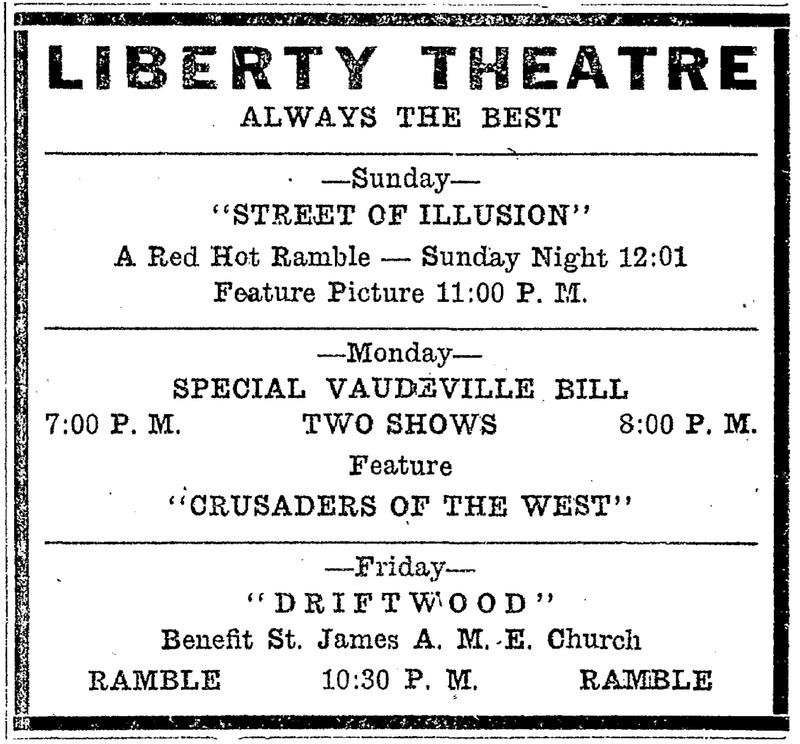
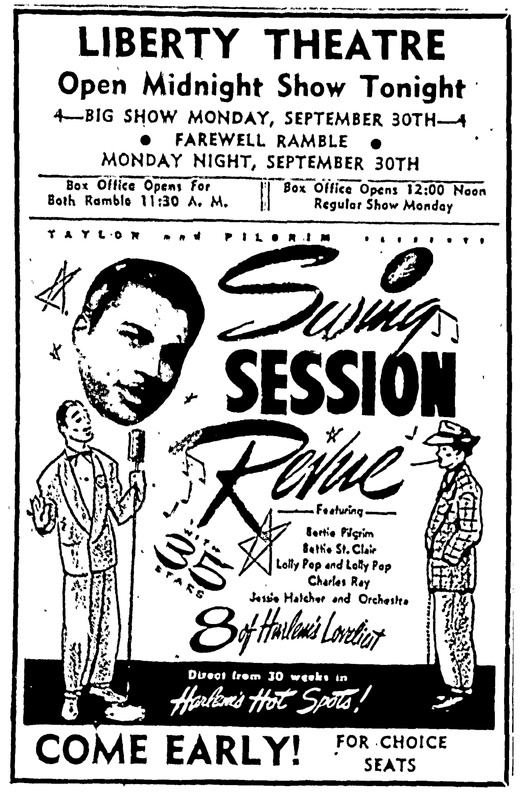
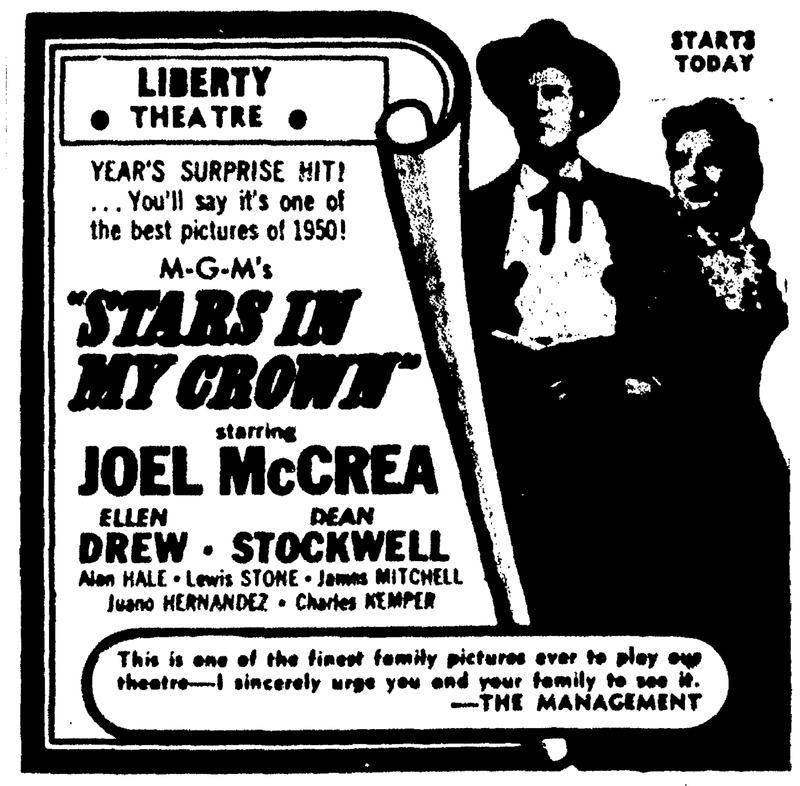
The Liberty Theatre is a two-story brick building that was built with a sixty by thirty-foot stage equipped for live performances and film screenings in a room that seated a maximum of 540 attendants; films were projected on a retractable stage-mounted screen, illuminated by a projection booth located on the second floor. Screenings of silent films in the early years of the theater were accompanied by live performances by local musicians. The Liberty was constructed with the primary purpose of housing film screenings, and some of its most promoted events in surviving advertisements from the era were their Saturday matinees, and their Midnight Rambles, or after-hours screenings of “race films” featuring majority Black casts. Movie tickets cost $0.05 for balcony seats, and $0.10 for orchestra seats; in the 1950s, the Liberty formed a partnership with local beverage company RC Cola that would allow attendants to exchange five RC bottle caps for a ticket to the Saturday matinee. This helped make the theater accessible to young children in the area and other people who did not have access to a steady source of income.
The Liberty was one of the largest movie houses in the area, and its size, coupled with its non-segregated programming, also made it a popular destination for performing artists in the Chitlin’ Circuit. The theater soon became home to a diverse range of performance programming, such as vaudeville acts, minstrel shows, revues, and concerts by both local and famous jazz and blues artists. Unfortunately, concert programs and advertisements from the theatre’s prime are extremely scarce, making it difficult to verify exactly who performed there. Artists such as Ma Rainey, Duke Ellington, Ella Fitzgerald, Cab Calloway, Fats Waller, and Louis Armstrong are all said to have played concerts at the Liberty, but no concrete evidence supports these claims. It is possible that these rumors originated from stories of performances by these artists organized by the local chapter of the Elks Lodge fraternal order, which took place at an exhibit hall in the old Columbus Fairgrounds, not at the Liberty. Some sources even list Ma Rainey as a proprietress of the Liberty, though this claim appears to be entirely unsubstantiated.
Decline and Closure (1960s-1973)
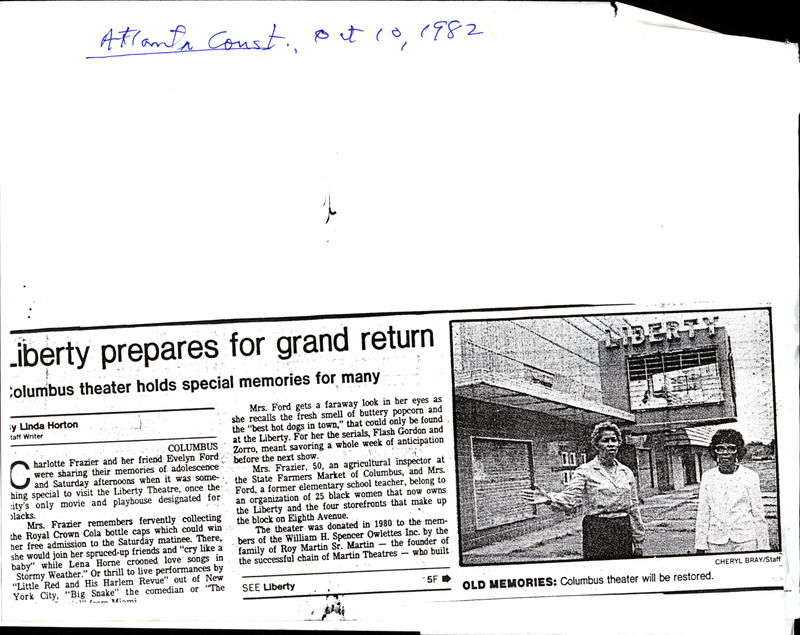
Much of The Liberty Theatre’s success stemmed from its characterization as a non-segregated venue in the era of Jim Crow laws; when these laws were abolished in the mid-1960s, the theater saw a sharp decline in popularity as it lost its unique niche and its customer base shifted to newer, more modern theaters. The theater continued to operate for roughly another decade, but it struggled to ever develop a new sense of identity, and finally closed its doors in 1973, with the building being left vacant and in disarray before it was eventually donated to the Golden Owlettes by the Martin Theater Company in 1984.
Restoration Efforts (1980-1997)
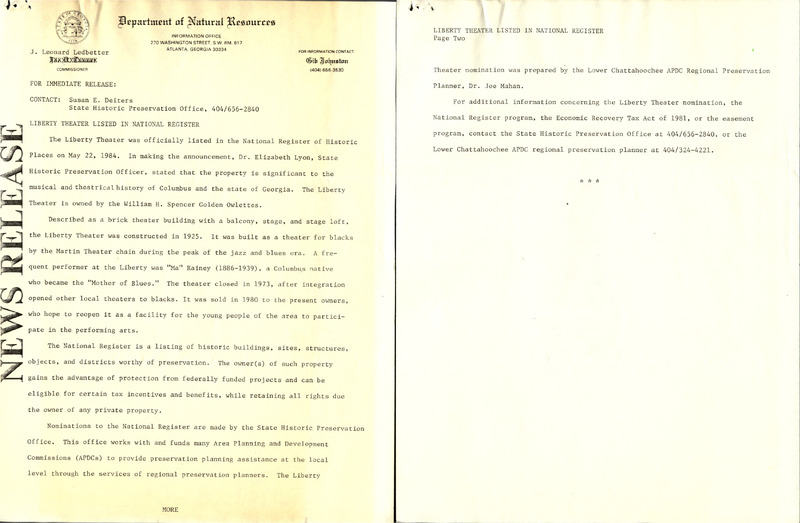
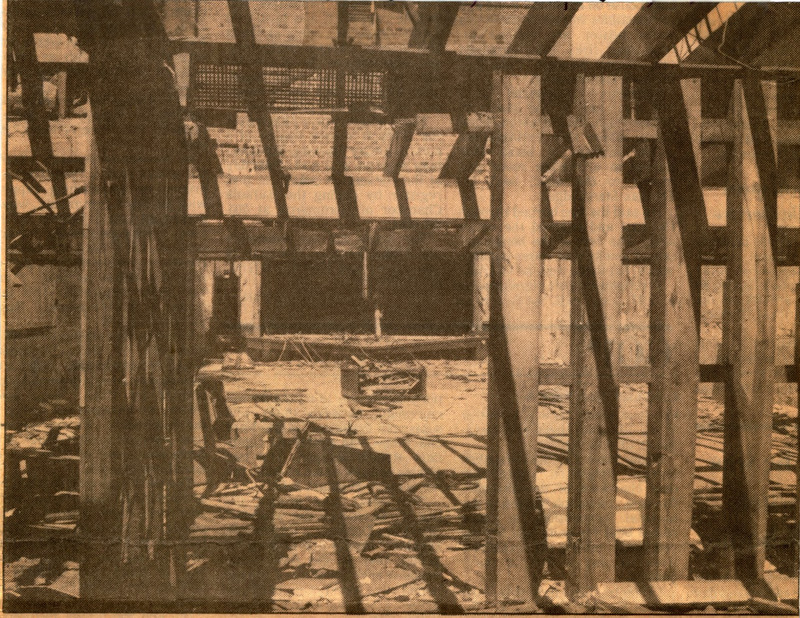
Formed in 1972, The William H. Spencer Golden Owlettes, Inc. is a non-profit organization, founded by Spencer High School alumni, dedicated to the preservation of local Black history in Columbus. The Liberty Theatre was donated to the Owlettes in 1980 after their successful restoration of the historical home of William H. Spencer, a pivotal figure in local Black education during the segregation era. In 1984, The Liberty Theatre was both successfully nominated for placement in the National Register of Historic Places and deemed historically significant by the Georgia Trust for Historical Preservation, after several years of campaigning by the Owlettes. These recognitions protected the building from demolition amidst ongoing urban development in the area, and allowed the Owlettes, alongside another non-profit known as the Black Historic Sixth and Eighth Preservation, to put their restoration plans in action. Unfortunately, their plans were upended by a windstorm that passed through the area in 1985, and the building, which beforehand needed only relatively minor repairs, suffered intense damage to its structural integrity, including a partial collapse of the roof.
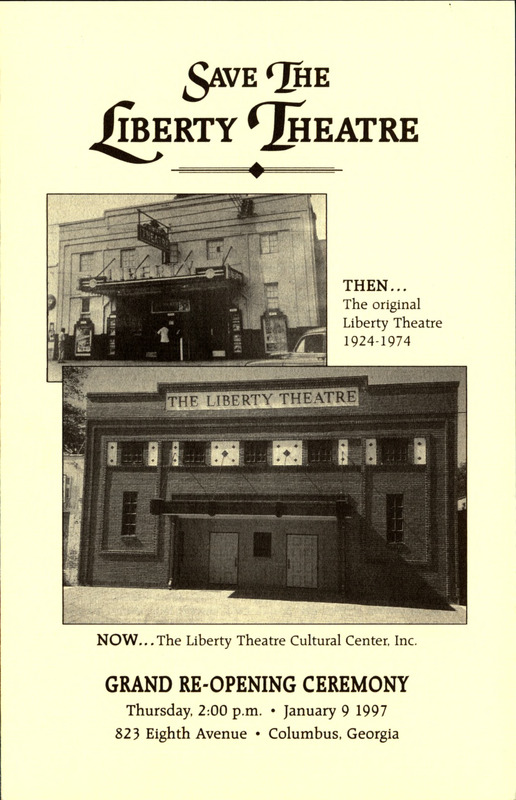
Following the 1985 windstorm, the Owlettes, facing a significant obstacle to their plans, campaigned for grants and donations from a great number of organizations, governmental bodies, and local donors, including Georgia State Representative Calvin Smyre, who ultimately took on the role of President of the board for the reopened Liberty. The funding the group received allowed for them to begin “Phase Two” of the restoration plan, which, alongside restoring the Liberty also entailed a thorough redevelopment of the surrounding Fifth and Sixth Avenue area, with a focus on preserving local history. This area was planned to be called “Liberty Square” and would include restored historic homes from the early 20th century, as well as a walk-in-museum within The Liberty Theatre that would house artifacts of some of the musicians who played there in its heyday. To help fund this plan, the City of Columbus and the Owlettes secured a one-million-dollar Special Application Grant from the US Department of Housing and Urban Development in 1993, expressly for the purpose of restoring the theater, which would serve as the cornerstone of the Liberty Square. The redevelopment plan was estimated to cost a total of $23 million in 1995, and the funds necessary to fully realize the project were never secured. However, after $1.6 million in repairs, the newly renovated Liberty Theatre finally reopened its doors after a grand opening ceremony on Thursday, January 9, 1997.
Reopening (1997-Present)
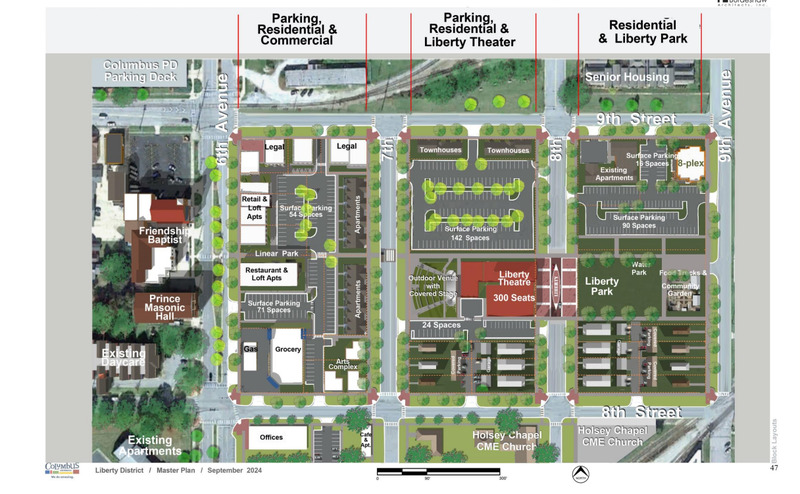
Unfortunately, the reopened Liberty Theatre seemingly failed to ever recapture the magic of its prime years, and though it continued to hold events into the 2010s, the theater once again fell into disrepair by the 2020s and is currently closed to the public indefinitely. In 2022, the Columbus Consolidated Government took over ownership of the Liberty and is in the process of continuing The Owlette’s Liberty Square plan under the name of the “Liberty District.” The advisory board for the Liberty’s reconstruction aimed for a 2025 opening to celebrate the 100th anniversary of the theater, but unexpected issues with structural integrity and health concerns stemming from mold in the building have presented significant challenges to the Liberty’s reopening.