
Cheap Publications
By the 1860s, advances in printing technology, such as steam-powered presses and inexpensive wood-pulp paper, transformed the publishing industry. Books and pamphlets could be produced quickly and cheaply, reaching audiences far beyond the elite. This print culture was crucial in wartime, when soldiers needed portable, affordable texts to carry into battle and camp. Quintard’s Balm for the Weary and Wounded, printed by Evans & Cogswell in Columbia, South Carolina, epitomizes this trend. Its small size, fragile paper, and plain binding reflect the deliberate choice to prioritize accessibility over durability. Quintard and his publishers understood that soldiers needed cheap, portable spiritual resources that could be tucked into a knapsack or jacket pocket.
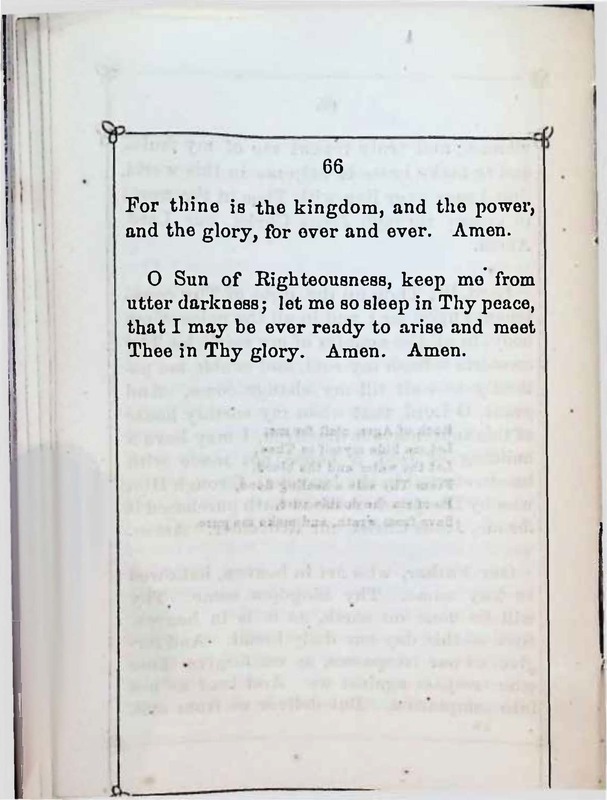
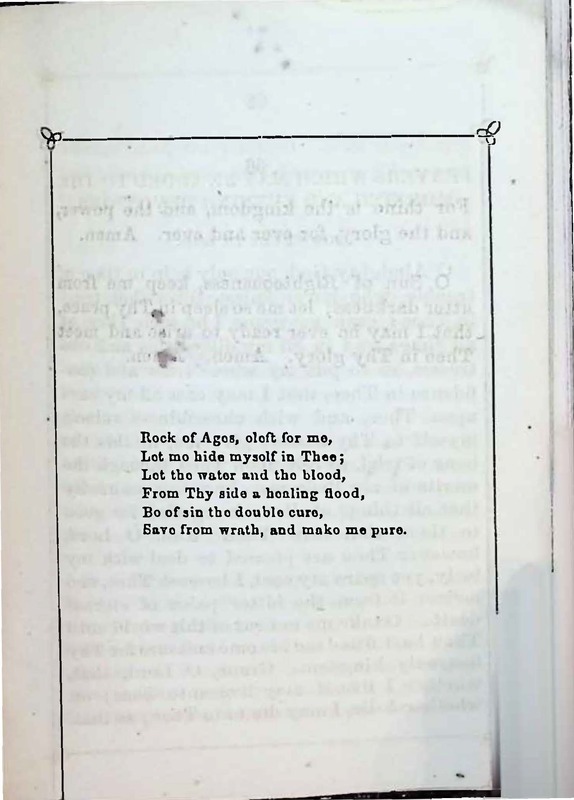
Another way publishers and printers would reduce the cost of a book was to print multiple smaller pages on a single sheet and then cut them out. This could lead to miscuts, as seen in this copy of Balm for the Weary and Wounded on pages 66 and 67. This cost-cutting practice was a part of the larger cost saving strategy.
This strategy mirrored broader wartime publishing practices. As Andrew Pettegree argues in The Book at War, books in times of conflict became “weapons in the war of ideas,” mass-produced to shape morale and identity.[1] Quintard’s book was part of this larger print revolution, showing how inexpensive publication could increase access to faith and comfort.
[1] Pettegree, Andrew, The Book at War: How Reading Shaped Conflict and Conflict Shaped Reading (New York: Basic Books, 2023).