
Browse Items (3886 total)
Sort by:


1929 Flood

1929 flood, Columbus, Georgia. Photo shows a line of houses submerged in water.
17. Establishing Columbus

There were settlements on both banks of the Chattahoochee prior to the founding of Columbus. The community of Wewoka was home to three hundred people who lived in log cabins and tents along the eastern banks of the river. Residents were involved in…
16. Creek Indians

The Creek Indians, British, and Spanish colonists had established trading relationships in the American southeast since the seventeenth century. The Creeks were adept diplomats between these two European powers. However, the newly formed nation of…
15. Iron Works & Arsenal

Since their founding in the mid-19th century, the Iron Works and One Arsenal Place first manufactured agricultural tools for the local plantation economy. During the Civil War, these facilities became a lead producer of textiles and gunboat parts for…
14. Horace King-Bridge builder

Born into slavery in South Carolina, Horace King (1807-1885) and his owner John Godwin moved to Columbus in 1832 to support the rapid development of recently ceded Creek lands. King and Godwin’s initial contract was Columbus’ first bridge…
13th Street A&P Exterior
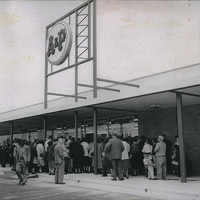
Exterior view of the A&P Grocery store located in the 13th Street Shopping Center.
13. Eagle and Phenix Mills

Owned by William Young, the Eagle Mill was built in 1851. Throughout the city, seventy percent of the mill workers were women and children as they had small and more dexterous hands, and they were cheaper to hire. During the Civil War, Columbus…
12th Street in 1922

White's Books and Stationary and Bonita Photo-plays movie gallery advertising Cap'n Kidd directed by J. P. McGowan with five cars parked on 12th Street.
12. Establishing Phenix City.

In June 1832, local entrepreneur Daniel McDougald and Robert Collins from Macon paid $35,000 for the one square mile grant directly across the Chattahoochee from Columbus that the Treaty awarded to mixed blood Benjamin Marshall. They published in the…
11. Columbus at Play

From the Creek game of stickball ( from which the game of lacrosse developed) in the nineteenth century along the banks of the river, to the twenty-first century whitewater rafting, Columbus’ recreation history is rich and colorful. Recreation…
10. Phenix City Story
In the first half of the twentieth century, Phenix City, Alabama became a notorious haven of crime. Prohibition in Alabama began in 1915 (ended in 1933) and Phenix City developed as a large-scale alcohol manufacturing and distribution hub, along…
#SolidarityPrints

Photos of art placed around Idle Hour Park (Phenix City, AL)
#4 Fire Department

First Fire Truck in Columbus
#1 Supervisors

A group of men, in button down shirts and ties, standing together beside weaving machinery.
#1 Supervisors

A group of men, in button down shirts and ties, standing together beside weaving machinery. Almost every individual was facing the camera.